Having spent thirty years helping small businesses through one wave of change after another, we've learned that these shifts rarely wait for permission. The real question isn't whether AI arrives in our lives. It's how we choose to travel with it, and what we honour along the way.
Some people are deciding to keep AI at arm's length, and that's a perfectly fair choice. But stepping back from it isn't quite the same as stepping out of it. It's already shaping the services we use, the searches we make and the way customers find businesses, whether we notice or not. Nor is this moment all light. Many AI models are running side by side, few if any making money, and someone will pay for that. In a sense we already are - in energy, in resources, in the strain on the planet - and I suspect some people will lose a great deal of money before this settles. We're not heading into easy days.
And yet something real is happening too. In my own work, I'm producing more that is genuinely useful. My guidance is clearer, my message lands more cleanly, and my days feel more purposeful. It isn't fake, and it isn't a machine doing the work instead of me. It's me, extended. The best way I can explain it is with a story about getting lost in Leicester.
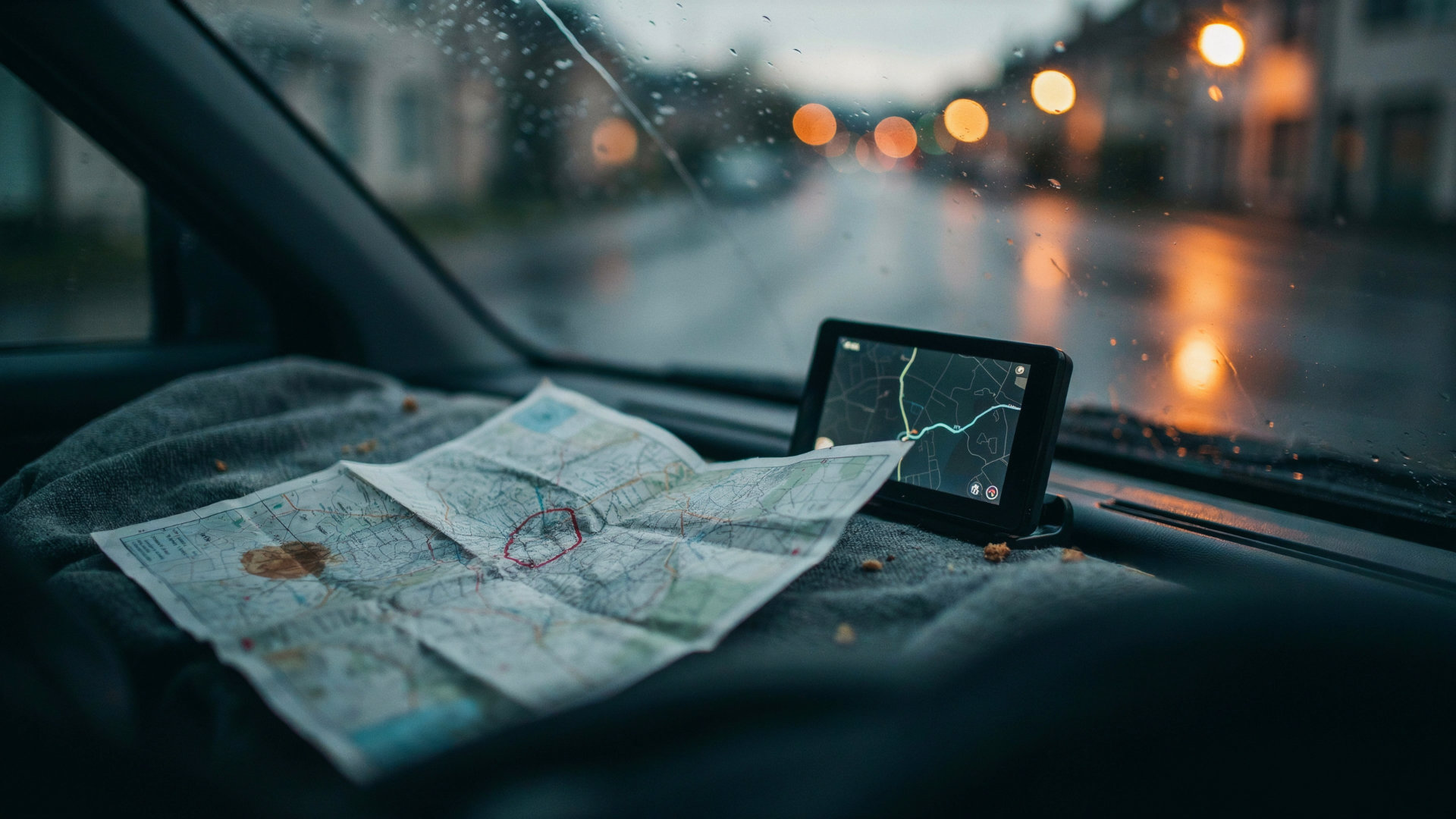
Not so long ago, finding somewhere new meant scribbling down directions from a phone call. Head into the city on the A-road. Turn left at the Jet garage by the hotel. Second right after the lights, over the roundabout, past the big house, and park behind the Mercedes. Except the Jet garage had become a Shell garage four months earlier, and the people giving directions had never noticed, because to them it would always be the Jet garage. So I'd sail straight past it, realise something was wrong, and pull over to ask a stranger, who would kindly reel off a whole new route while I nodded politely and took in almost none of it. Then it would start to rain. I'd be late, stressed and squinting at my notes, and I'd still miss the final turning. Plenty of people simply never attempted journeys like that. Some of us cracked on regardless, and slowly learned a few places by heart.
Then came satnav, and it was revolutionary. A friend of mine said he loved his more than almost anything in his life, because it ended years of stress and wrong turns. Once I had one, I forgot how to get to Leicester entirely - I couldn't tell you which roads I'd taken - and I didn't mind a bit, because I could finally relax, put the radio on and simply arrive. The early versions were clunky and out of date, but they were still astonishing. When Waze came along and showed what was happening on the road ahead, it felt like magic all over again. Some people held on to their maps, worried the new gadget would crash or run out of battery. I understood them. But almost every time, almost everyone chose the satnav. Why wouldn't you?
The map makers didn't disappear. Cartography still matters, and someone still has to understand the shape and substance of a place. But paper maps became specialist items, and the trade became smaller and quieter. Perhaps one day, with no power and no signal, we'll wish we'd kept the old skills. I don't think that day is close. There might be some unpredicted pain along the way, but its highly unlikely that there will ever be a return to paper based maps.
AI isn't so different. There's a mess to sort, problems to solve, and far too many resources being burned. In some ways it's a disaster. It's also a time of extraordinary abundance. Both things are true at once. And the losses are real too - I know the romance of a steam engine pulling into a station, the throb and the billowing smoke and the smell that's wonderful as long as you're not in a tunnel, and a quiet electric motor will never stir the heart in quite the same way. So I understand the map makers. I understand the companies that once made inkwells. They began as something niche, grew into something everyone needed, and became niche again. That is how change has always gone.
For small businesses, that's the part worth holding on to. You don't need to chase every new tool or panic about the ones you haven't tried. But it's worth recognising which roads the world is now travelling, and making sure your business can still be useful and found when people get there. That has always been our job - and it hasn't changed.